
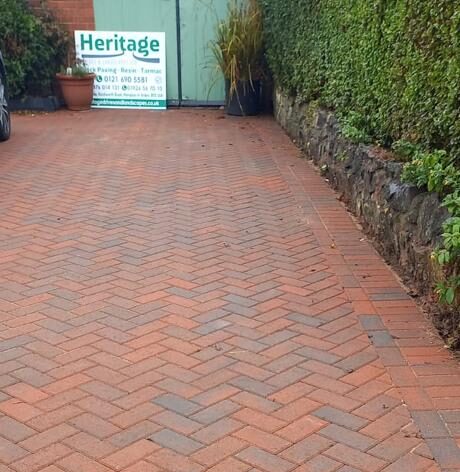
Water sitting on your driveway might not seem like a major issue at first. After heavy rain, a few shallow puddles can appear harmless. However, when water regularly collects on the surface, it often signals an underlying problem. Over time, standing water can weaken the base of your driveway, cause surface damage and lead to costly repairs.
Understanding the real reasons behind drainage issues is the first step towards finding effective driveway drainage solutions. In this guide, we explore seven hidden causes of driveway puddles and explain how to fix them properly.
Poor Initial Ground Preparation
One of the most common but overlooked causes of drainage problems is poor groundwork. A driveway is only as strong as the base beneath it. If the sub-base was not compacted correctly or the ground levels were not measured accurately, water may struggle to flow away naturally.
Without proper preparation, driveway puddles can form even on newly installed surfaces. Over time, the base can shift or settle unevenly, creating dips where water collects.
Professional driveway drainage solutions always begin by assessing the condition of the base layer. In some cases, lifting and relaying sections may be required to restore proper levels.
If you are unsure whether your installation was completed correctly, you can learn more about proper preparation on our Driveway Installation Services page.
Incorrect Driveway Gradient
Every driveway should be laid with a slight fall, allowing water to run away from the property and towards a suitable drainage point. If the gradient is too shallow, or worse, angled towards your home, water will not drain effectively.
Incorrect levels are a frequent cause of persistent driveway puddles. Even a small miscalculation during installation can affect long-term drainage performance.
Effective driveway drainage solutions often involve re-establishing the correct slope or installing additional channels to guide water away safely.
For more information on how surface water drainage works, you can refer surface runoff here
Blocked Drainage Channels or Gullies
Drainage channels and gullies are designed to collect and direct water away from your driveway. However, they can easily become blocked by leaves, debris, mud or moss.
When channels are obstructed, water has nowhere to go. This results in visible driveway puddles forming after rainfall.
Regular maintenance is one of the simplest driveway drainage solutions. Clearing debris and checking drainage points throughout the year can prevent small blockages from turning into larger problems.
Our Driveway Maintenance Services include inspections to ensure your drainage system remains clear and functional.
Non-Permeable Surfaces Without Adequate Drainage
Not all driveway materials allow water to pass through them. Traditional concrete or poorly installed block paving may not be permeable, meaning water sits on the surface unless directed elsewhere.
Modern regulations often require permeable solutions or additional drainage systems to manage surface water correctly. Without them, heavy rainfall can quickly lead to driveway puddles.
Driveway drainage solutions in this situation may include installing drainage channels, soakaways or replacing sections with permeable materials such as resin-bound systems.
If you are considering upgrading your driveway, exploring Resin Driveways may provide a more drainage-friendly option.
Settling and Subsidence
Over time, ground movement can affect any driveway. Soil expansion, shrinkage or poor compaction can lead to minor subsidence. This creates uneven surfaces where water naturally gathers.
Even high-quality driveways can develop small dips after years of use. Vehicles regularly parking in the same spot can also contribute to localised sinking.
Addressing this issue requires identifying the affected areas and correcting the levels. Professional driveway drainage solutions often involve lifting the surface, rebuilding the sub-base and restoring proper alignment.
Ignoring subsidence can lead to further structural damage, particularly in block paving installations.
Nearby Landscaping Altering Water Flow
Drainage problems are not always caused by the driveway itself. Changes in surrounding landscaping can redirect water towards your driveway.
New patios, raised garden beds or boundary walls can interfere with natural drainage patterns. In some cases, neighbouring properties may also influence water flow during heavy rain.
If landscaping has altered the way water moves across your property, driveway puddles may begin appearing in areas that were previously dry.
Effective driveway drainage solutions may involve adjusting ground levels around the driveway or installing additional drainage systems to manage redirected water.
You can explore our Landscaping Services to see how proper design integrates drainage planning from the start.
Cracked or Deteriorating Surface
Over time, small cracks can develop in driveways. Water can seep into these gaps and undermine the base material beneath. As the sub-base weakens, minor depressions form and water begins to pool.
This is particularly common in older concrete surfaces and neglected installations. Left untreated, the problem often worsens during winter when freezing temperatures cause expansion.
Driveway drainage solutions for surface damage may include sealing cracks, resurfacing sections or replacing areas where deterioration has progressed too far.
Routine inspections can identify early warning signs before driveway puddles become a permanent issue.
Why Drainage Should Never Be Ignored
Standing water is more than just an inconvenience. It can cause staining, encourage moss growth and reduce slip resistance. Over time, it can compromise the structural integrity of your driveway.
Poor drainage can also contribute to damp problems near your property if water consistently collects close to external walls.
Investing in proper driveway drainage solutions protects both your driveway and your home. A well-drained surface will last longer, require fewer repairs and maintain its appearance throughout the seasons.
Choosing the Right Driveway Drainage Solutions
The correct solution depends entirely on the cause of the issue. In some cases, regular maintenance and clearing blockages is enough. In others, more significant adjustments to levels or drainage systems are required.
Professional assessment is essential to determine whether the problem lies with the surface, the base or the surrounding landscape.
At Heritage Drives and Landscapes, we take a practical approach to diagnosing driveway puddles and implementing long-term driveway drainage solutions. We assess gradients, inspect drainage channels and evaluate the sub-base before recommending any work.
If water regularly collects on your driveway, it is worth addressing the issue early. Acting now can prevent larger repairs in the future.
Contact us today for expert advice and a no-obligation assessment. Proper drainage is not just about removing puddles. It is about protecting your investment and ensuring your driveway performs as it should for years to come.